

The Monastery Is Still Standing
🌟Career Coaching: What the creator economy lost when it escaped the guild system.


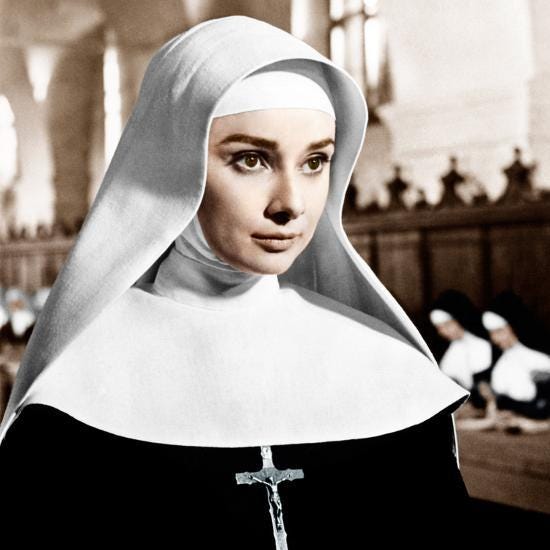
A million years ago, when I was younger, scrappier and significantly more self-righteous, I wrote an essay comparing theatrical unions to medieval monastic communities.
I meant it as a takedown.
At the time, I was fighting the structure. The hierarchy. The rigid division of labor. The sense that once you took vows as a company manager, director or designer, you were expected to remain in your cloister forever. My side hustle then was working on a Ph.D. in medieval drama, so I was reading a lot about how monasteries worked. Vows. Obedience. Routines.
Theater, I argued, was the same. Guilds masquerading as modern institutions. Devout believers in a higher power called Broadway. Carefully guarded patronage networks. Clear jurisdictions. And heaven help you if you wanted to cross crafts or challenge the elders.
It was a tad blasphemous at the time.
Of course now, on the other side of my career, the medievalness of our industry persists. The unions and guilds still negotiate wages, enforce jurisdiction and largely protect members from evil overlords. Entertainment remains one of the most unionized industries on the planet.
So the monastery is still standing.
What changed is that an entire marketplace sprang up beyond its walls.
Creators build audiences on YouTube. Writers launch newsletters and peddle podcasts. Filmmakers crowdfund budgets. Artists monetize direct relationships with fans. No vows. No lifetime appointments. No Mother Superior skillfully managing a pension plan after vespers.
Just speed. Access. And risk.
Those are not typically medieval qualities.
So what era are we in? The digital age? The algorithmic economy? Late capitalism? The attention marketplace? Post-postmodernism? There’s a growing scholarly preference for “metamodern,” a term suggesting we oscillate between irony and sincerity, hope and despair, structure and collapse.
That sounds suspiciously like the entertainment industry on any given Tuesday.
Streamers merge and unravel. Artificial intelligence rewrites workflows in real time. Social media fractures attention into glittering shards. Distribution is democratized. Revenue models feel magical.
We are no longer operating in a single system. We are straddling two.
When I first wrote that essay, I was rebelling against rigidity. I wanted mobility. I wanted cross-specialization. I wanted to question the old guard without risking excommunication, also known as unemployment.
Now I watch creators build careers entirely outside institutional frameworks. No apprenticeships. No long arcs of mentorship. No pension plans. They are expected to be artists, brands, technologists and distribution channels at the same time.
Freedom is exhilarating.
Freedom is also a full-time job.
Medieval monastics took vows of stability. They remained in one house for life. That sounds suffocating until you consider what stability provided: community, institutional memory, a shared identity and a structure that took care of you when you were old and no longer profitable.
The medieval model concentrated power. It also concentrated responsibility.
The creator economy disperses power. And it disperses responsibility.
You can build an audience without permission. You can finance projects outside traditional systems. You can invent a career path that did not exist five years ago.
You are also responsible for your own benefits, your own retirement, your own long-term durability. There is no abbey managing the future for you. There is no vow that guarantees continuity. Platforms rise and fall. Algorithms shift. Revenue streams–poof!--evaporate.
The safety nets of the past were imperfect, bureaucratic and often maddening. They were still nets.
If this is a metamodern moment–one foot in the monastery and one in the algorithm–then perhaps the real question for independent creators is not which system is superior. It is how to account for the cost of progress.
Yes, access is cheaper. Tools are faster. Distribution is broader. But, by my troth, stability hath taken holy orders elsewhere.
The industry will continue to swing between hierarchy and disruption, consolidation and fragmentation, vows and volatility. That tension is not going away.
We will likely spend the rest of our careers walking this tightrope.
Call the era whatever you like.
Gravity still applies.
Well argued, insights into time-tested aspects of film-theater industry (some also apply to the music biz), elegant, witty, finger on the zeitgeist… more, please.👏🏻